❌

Normale Ansicht

CES 2026 offered a lonely vision of the future

LG opened CES 2026 by outlining its vision to reduce the physical effort and mental burden of life. Buy enough of the devices it’s presently working on and you’ll exist in an environment of “ambient care,” coddled by the machinery in your home. It sounds positively utopian: When the sensors in your bed know you’ve not slept well and are getting a cold, a robot will wake you with a glass of freshly squeezed orange juice. When you’re in a rush to get to work, the robot will make you a sandwich for you to eat on the go, sparing you the effort of making it yourself. The more I roamed the halls of the show after that, the more I couldn’t help feeling uneasy about what so many companies here were pitching. To me, the vision of the future on show here is equal parts solitary and infantilized.

There’s obvious reasons for this: AI swallowed the tech industry’s oxygen, sapping any chance of innovation in consumer hardware. The advent of Panther Lake is a win for Intel, but it’s not going to enable dramatic changes in how people work with their PCs on a daily basis. The US policy shift away from EVs and toward fossil fuel-powered vehicles, too, means that the big names in auto manufacture have similarly shied away from the show. That left CES full of various robotics startups offering early visions of humanoid robots designed to work on production lines, take care of your home and replace your pet. I saw more than a few stands where booth attendants were pretending to delight in teaching their wheeled robot pets to play fetch. At least, I hope they were pretending.

I’m painfully aware of how many devices felt like they were only a hop, skip and a jump away from the Sharper Image catalog. Gadgets that are designed to fill some perceived hole in your life that won’t actually make things better or easier in the long run. I’m leery about denigrating assistive technology that offers a vital lifeline to people with accessibility needs. I’m also leery about knocking devices that may enable people to keep working despite wrestling with long term injuries — I've got one eye on the raft of exoskeletons exhibited at the show which might help me work in the garden despite the weakness in my lower back. But I’m also not quite sold on how many toilet computers, massage chairs and scootcases we all need in our daily lives. 

There’s also the elephant in the room that many of these innovations seem intent on acting as a replacement, substitute or supplement for real interaction. Robotic panda bears scuttling around your home to save you the effort of caring for a real flesh-and-blood pet. Holographic AI waifus that will obsequiously respond to whatever you ask of it with nothing but flattery and agreement. The sheer volume of AI Labubus operating as friend, enemy, companion or a combination of all the above. Cuddly home robots that are little more than a tablet on a moveable base that’ll keep your kids entertained so you don’t have to. Yes, I’m being unfair, but sometimes shows like this make me sound like someone’s grandpa angrily insisting you darn kids get off your screens. 

I feel some of these gadgets are specifically designed to enable a degree of detachment from our own bodies. We’re spending so much time getting dopamine from our devices that we’re no longer able to pay attention to how our bodies are feeling. In LG’s vision of the future, moving around for ourselves and making our own food is a thing of the past, which will, surely, put a dent in our physical and mental health. We lose the ability to connect with the people around us because we’ve spent too long being flattered by our AI lackeys. We need a machine to monitor the food we eat and the crap we excrete because we’re not willing to pay attention to what we’re doing. Much in the same way that AI encourages us to take shortcuts rather than enjoy the process of being creative, the rest of the tech industry seemingly wants us to shortcut the fundamentals of life.

This article originally appeared on Engadget at https://www.engadget.com/ces-2026-offered-a-lonely-vision-of-the-future-160000993.html?src=rss

©

  •  

Bluetti's Charger 2 uses solar and engine power to charge your portable battery

If you’re off-roading, it’s a neat idea to use your engine to top up your battery, which prompted Bluetti to launch the Charger. You could hook it to your alternator and draw off energy as you drove to make sure you turned up to your campsite with full batteries. But if you’re also toting around solar panels on your roof, then it’s a shame you can’t also use that power to top up. This omission is what prompted Bluetti to turn up to CES 2026 with the Charger 2, which will take power from your engine and your solar panels at the same time.

Bluetti says the Charger 2’s dual-input architecture will accept 600W from the panels, 800W from the engine. All of that power will charge your batteries significantly faster than the first model, claiming it’s 13 times faster than a standard car charger. In addition, Charger 2 can manage more than one Bluetti power station and expansion batteries, should your power needs stretch. And the system is smart enough to know where the energy is coming from, managing the sources based on their availability. Plus, you can use it to jump start your engine should you need the help.

If you’re a Charger 1 owner and want to upgrade, it’s fairly painless to drop the old unit out in favor of its replacement. It uses the same cabling, so you can just hook the new model to your existing wires without having to get your fingers greasy. To reward that loyalty, the company will sell you an upgrade for $99, at least through February 7.

As for everyone else, you’ll be able to pick up the Charger 2 for $349 through February 7, at which point the price leaps to $499.

This article originally appeared on Engadget at https://www.engadget.com/general/bluettis-charger-2-uses-solar-and-engine-power-to-charge-your-portable-battery-230000270.html?src=rss

©

  •  

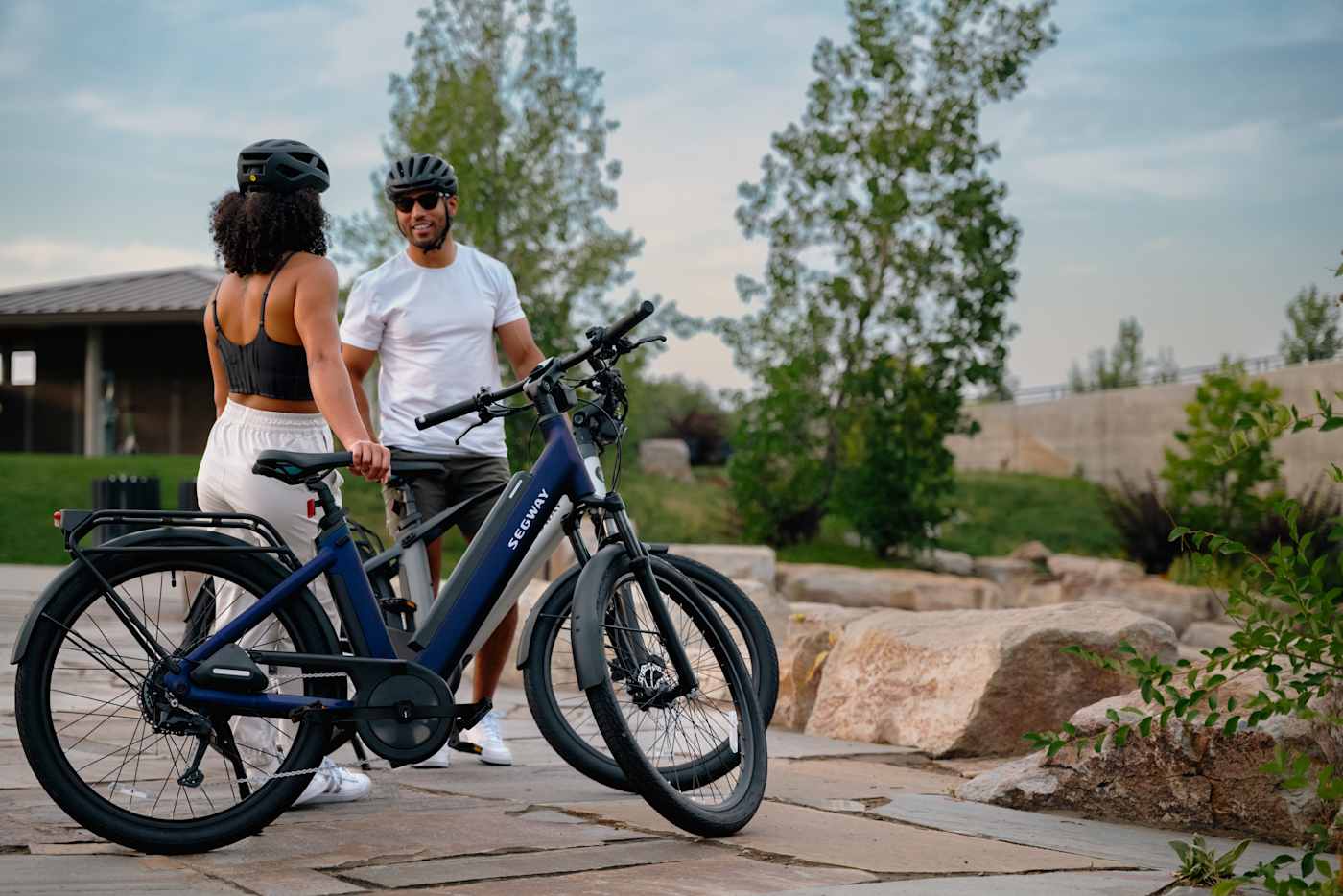
Segway launches two more e-bikes at CES

I’m no psychologist, but I get a sense Segway turned up to CES 2026 with something to prove after last year. Certainly, it’s gone out of its way to prove its micromobility bona fides with the press, who perhaps were a bit too sniffy that scooter people were launching an e-bike. This year, Segway’s not just launching two more mainstream e-bikes, but an electric dirt bike, all of which are crammed with the sort of tech that might just make everyone halt their sniffiness.

First up, there’s the Myon, a chunky step-through with a decent-sized pannier rack for folks who want to go far and carry a bit of luggage as they go. That’s hardly an eye-catching proposition given so many e-bikes fit within the same template, but Segway is hoping its tech will make a difference here. Myon is equipped with electronic gear shifting (tied to a Shimano CUES chain drivetrain), electronic motor optimization and the company’s proprietary Intelligent Ride System. 

The latter, along with Segway(TM) TurboTuned(TM) will automatically optimize motor and battery performance while under way. The company adds that the bike’s built-in gyros, cadence and torque sensors will meter out performance according to road conditions. So if you’re going up hill, the power will gently increase before you have to think about it. Additionally, if you stop at the lights, the system won’t just turn on the power to whatever you’ve set it at as soon as it senses the tiniest ounce of pressure on the pedal, removing the jerky start action you see in other bikes.

Segway’s broader pitch is that its bikes will also feature a whole host of smart features, including integration with Apple’s Find My network, GPS tracking, remote locking, integration with your health and fitness app of choice, and smartphone pairing. 

Muxi
Muxi
Segway

Muxi (pronounced moo-shee) is a more interesting piece of hardware, since it’s been built like a longtail cargo bike, but with the long tail chopped off. Even so, the focus is on cargo, with the bike getting an optional passenger seat with foot pegs, and an optional middle basket. Plus, the bike comes with a beverage cup holder (although given it has a direct drive motor, I’m not sure I’d want to cruise around at low speed while trying to sip my morning latte). To ensure you don’t struggle with your load, the bike comes with Hill Start Assist, Hill Descent Control, regenerative braking and traction control. Plus the aforementioned suite of added value features, like Find My integration, remote locking, GPS and the app integrations. 

Rounding out the announcements is the Xaber (say-br) 300, an electric dirt bike geared toward off-roading. It has three power modes, letting you learn on the equivalent of a 150cc engine, then dialing that up to 200cc, before topping out at 300cc. If you still want a greater sense of control, you can activate an electronic clutch, and if you want to cede more of it to the bike, you can set the maximum wheelie angle. If you want to enjoy all of that dirt bikin’ action, it’ll set you back $5,300 when it arrives.

As for Myon, it’s available to buy today from Segway’s official site and via its dealer network, priced at $2,000. Muxi will be available through those same channels in March, setting you back $1,700. 

This article originally appeared on Engadget at https://www.engadget.com/transportation/segway-launches-two-more-e-bikes-at-ces-130000152.html?src=rss

©

  •  
❌