There's more waffling going on about the future of electric vehicles in America right now than you might expect at a Belgian breakfast buffet. Some brands like Hyundai are staying committed, some brands like Honda are dialing back, and everyone else is simply doing their damndest to provide as many propulsion options as possible
Count Audi in that last category. On the EV side, it recently launched the new Q6 E-Tron and refreshed the ballistic E-Tron GT. On the internal combustion side, it has a new A6, and there's a full-size, three-row SUV coming in the form of the Q9. The company's latest car, though, can be found in the middle: Meet the new RS5, Audi's latest and greatest plug-in hybrid.
RS stands for "RennSport," or "Racing Sport" in German, the moniker applied to Audi's highest performing cars. RS designates an elite group of machines intended to be a bit more edgy and exclusive than your BMW M cars or Mercedes-Benz AMGs. The 2027 RS5 marks the first time an RS has come with both a big battery and a big engine, but the RS5 is much more than a novelty with a plug.
Tricky diff
2027 Audi RS5
Tim Stevens for Engadget
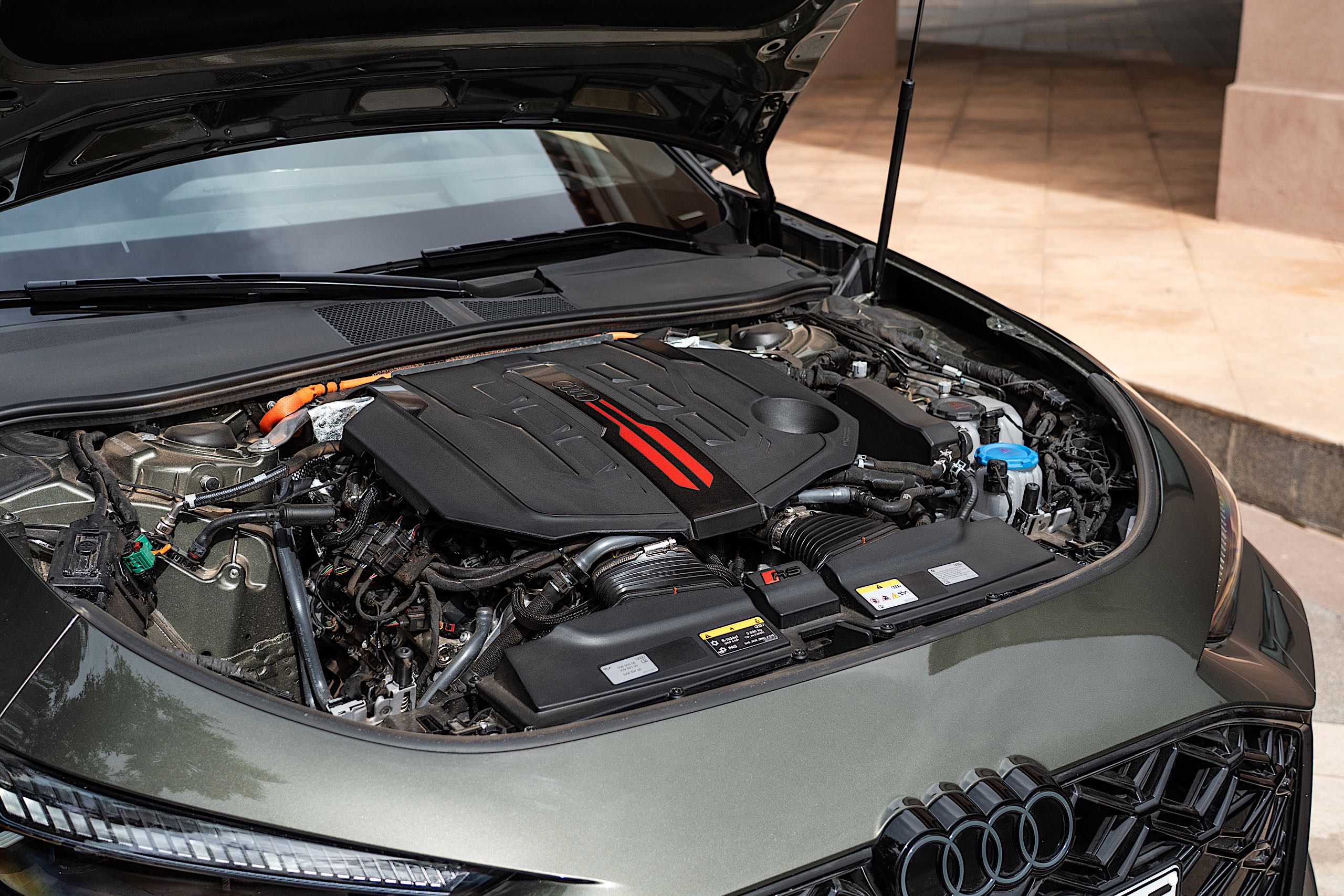
The main grunt of the new RS5 comes from a 2.9-liter, twin-turbocharged V-6 mounted up front under the hood. On its own, that engine produces 503 horsepower, a figure that you might think is plenty. Here, though, it has some help here in the form of not one but two electric motors.
The first is a typical hybrid arrangement, a 174-hp motor wedged in between the engine and transmission. This is the primary means of electric propulsion for the car, giving it a total, maximum system output of 630 hp and 609 lb-ft.
Because that motor is positioned where it is, the RS5 can still make full use of its eight-speed automatic transmission when driven only by the electric motor. That means a top speed of 87 mph before the engine kicks in. Once it does, it'll take you all the way up to 177 mph.
There's a second motor at the back, though, which is far more interesting. No, it isn't there to drive the rear axle like on the RAV4 Hybrid. The RS5 has a traditional Quattro setup with a mechanical differential in the middle to distribute power between the front and rear wheels.
The small, 11-hp motor at the back exclusively controls a new type of system that Audi calls Dynamic Torque Control. This motor uses planetary gearsets to selectively and effectively magnify the power to either the left or the right axle at the back. It may be small, but this motor makes the RS5 do some wonderful things.
Drift time
2027 Audi RS5
Tim Stevens for Engadget
For maximum fun in the new RS5, dial it over to what Audi calls Torque Rear mode. This configures the new rear differential to send maximum twist to the outside rear wheel. Combine that with the center differential, which can send up to 85 percent of the engine's power to the rear, and the result is a remarkably willing drift partner.
After less than 30 seconds behind the wheel on a closed track in Marrakesh, I was confidently sliding my way through a set of cones in a slalom, then pirouetting around a cone at the end in a tight circle, clouds of tire smoke hanging in the air. Normally, drifting a 5,200-pound, 630-hp machine rolling on sticky tires is a real nightmare. It's delightfully easy in the RS5.
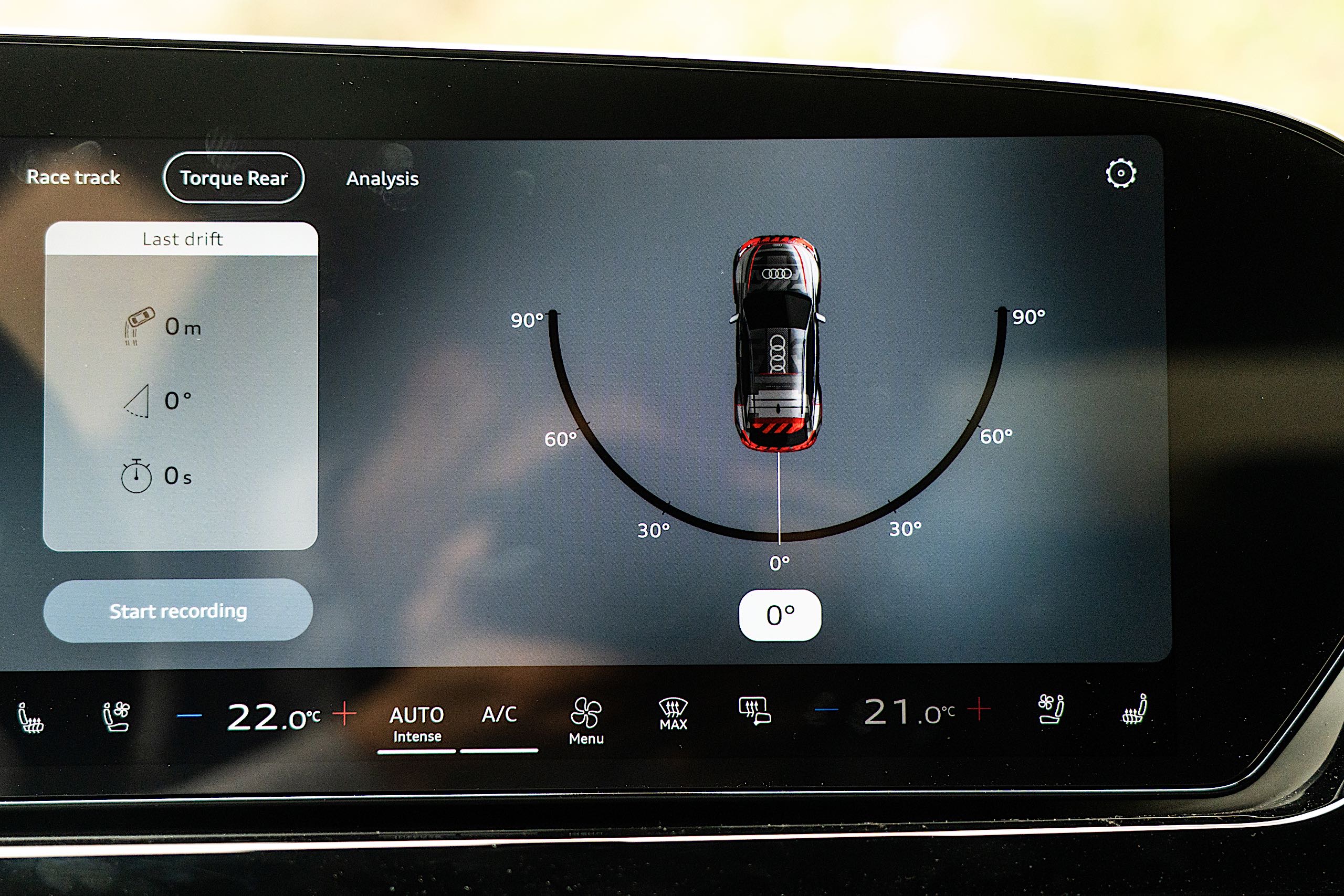
The car's differential setup not only makes this easy but also tracks just how successful you are at it. It records the time, length and even angle of your most dramatic drifts. You can even replay them on the touchscreen if you're so inclined, scrubbing back and forth to see what kinds of G forces you were generating.
This is part of a new extension to its infotainment system called the Audi Driving Experience. It'll also track lap times around race tracks, giving you a bit more information in the timeless pursuit of tenths of a second.
2027 Audi RS5
Tim Stevens for Engadget
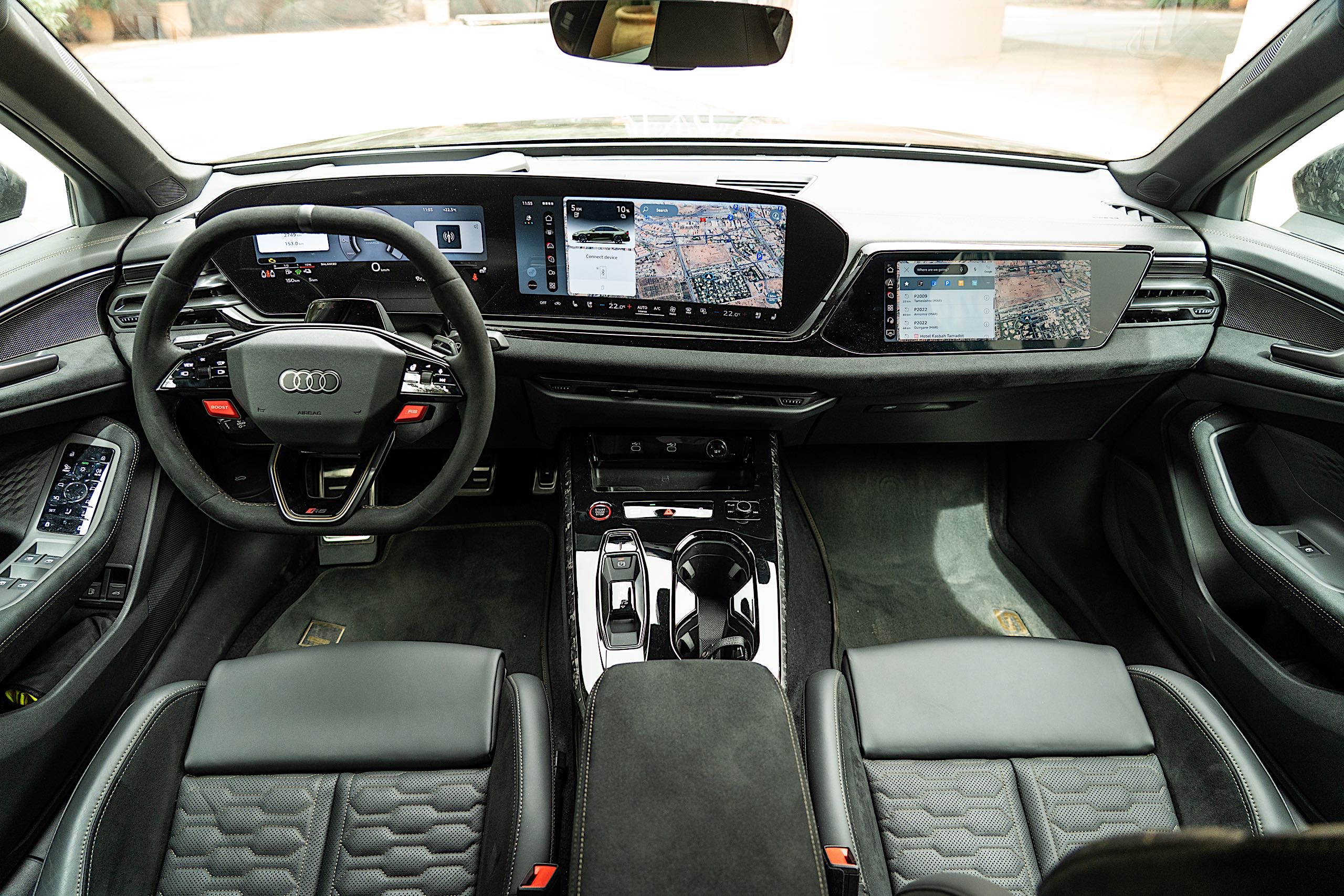
Audi also added a few custom screens showing the power distribution of the car and letting you monitor things like critical system temperatures and tire pressures at every corner. Otherwise, though, it's much the same interface as seen on most new Audis, with a 14.5-inch central touchscreen, an 11.9-inch gauge cluster and an optional 10.9-inch display way over on the right for the passenger.
That's a lot of displays, with the left two encased within an oversized, sweeping panel that stands tall and proud out of the dashboard. Too tall, actually. If big bezels ruin your day, look away, because there's a lot of wasted space here.
Likewise, if you don't like steering wheels with capacitive touch controls, you're not going to love the RS5. Audi has brought back the little scroll wheels under your thumbs, at least, but everything else on there is just a flat surface.
Putting the power down
2027 Audi RS5
Tim Stevens for Engadget
I spent the better part of a day driving the RS5 through the wild streets of Marrakesh and up into the Atlas Mountains to the south. In the city, I left the car in EV mode, letting that primary electric motor and the car's 25.9-kilowatt-hour battery (22 kWh net) do the heavy lifting. Audi says the car can cover up to 54 miles in this mode, and while I didn't have time to go that far on battery power, it seemed like an achievable estimate.
The car is perfectly pleasant in this mode, silent and even reasonably quick. In Comfort mode, the suspension is at its softest, and despite those giant wheels, the RS5 did perfectly fine over the decidedly imperfect Moroccan roads. But it wasn't until I got far away from the city that I could start to open things up a bit, working my way through the various drive modes and eventually all the way up to RS Sport, the most performance-oriented.
Here, the suspension is at its stiffest and the throttle at its sharpest, transmission swinging through its ratios eagerly to keep the engine singing. Jump on the gas, and the car really does leap forward, the electric motor doing its part to cover the power delay caused by the turbochargers in the mix.
You can feel that rear differential here, too, adding an extra bit of pivot to the rear when you're powering out of corners. But, on the way in, you really can feel the substantial weight of this car, the front end scrubbing and pushing forward when you ask too much of it.
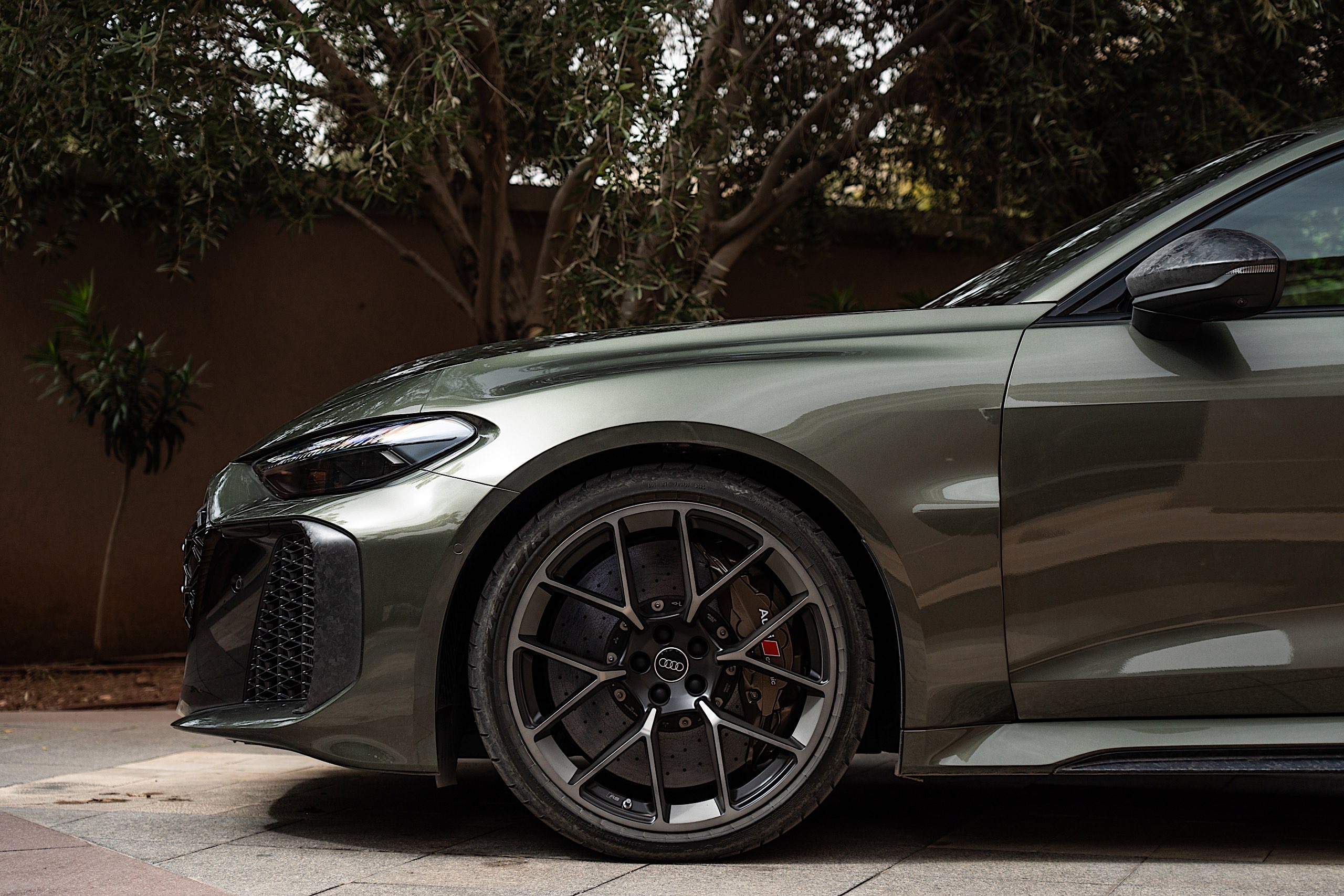
Again, this model gained more than 1,000 pounds over the old RS5, and though the improved suspension, drivetrain, tires and even giant, ceramic brakes all help to reduce its feel, there's no hiding that much mass.
Wrap-up
Yes, the RS5 has gained a lot of weight, and that hurts its nimbleness on track, but remember that this is a large, luxury sedan. It was never meant to be a lithe track toy. Despite that, the new RS5 actually feels far more fun and aggressive than its predecessor, a characteristic at least partially due to that trick new rear differential and the instant response of the new hybrid system. 54 miles of emissions-free range doesn't hurt, either.
The big question is cost, and sadly, Audi's not ready to answer that one yet. You do, at least, have a little time to save. The new RS5 doesn’t hit American shores until sometime in 2027.
This article originally appeared on Engadget at https://www.engadget.com/transportation/2027-audi-rs5-first-drive-big-thrills-with-a-big-battery-152057907.html?src=rss
Volvo hasn't exactly had a great run of EVs lately. The rollout of its flagship EX90 was stymied out of the gate by a bevy of software glitches. The EX30, meanwhile, was too expensive when it launched — the promised $35,000 model was incompatible with the currently chaotic global tariff situation.
Now, it's time for a new generation of EV from Volvo, one that's radically different at its core with a gigacast frame, a much higher-density battery and enough digital and literal horsepower to impress the most jaded of automotive enthusiasts. Mix in high-performance chipsets from both NVIDIA and Qualcomm, plus Google's Gemini AI onboard, and on paper, it has a lot to offer. After getting an early look at the thing at its unveiling in Sweden, I feel like this EV is ready and able to face off against BMW's new iX3 and Mercedes-Benz's upcoming GLC.
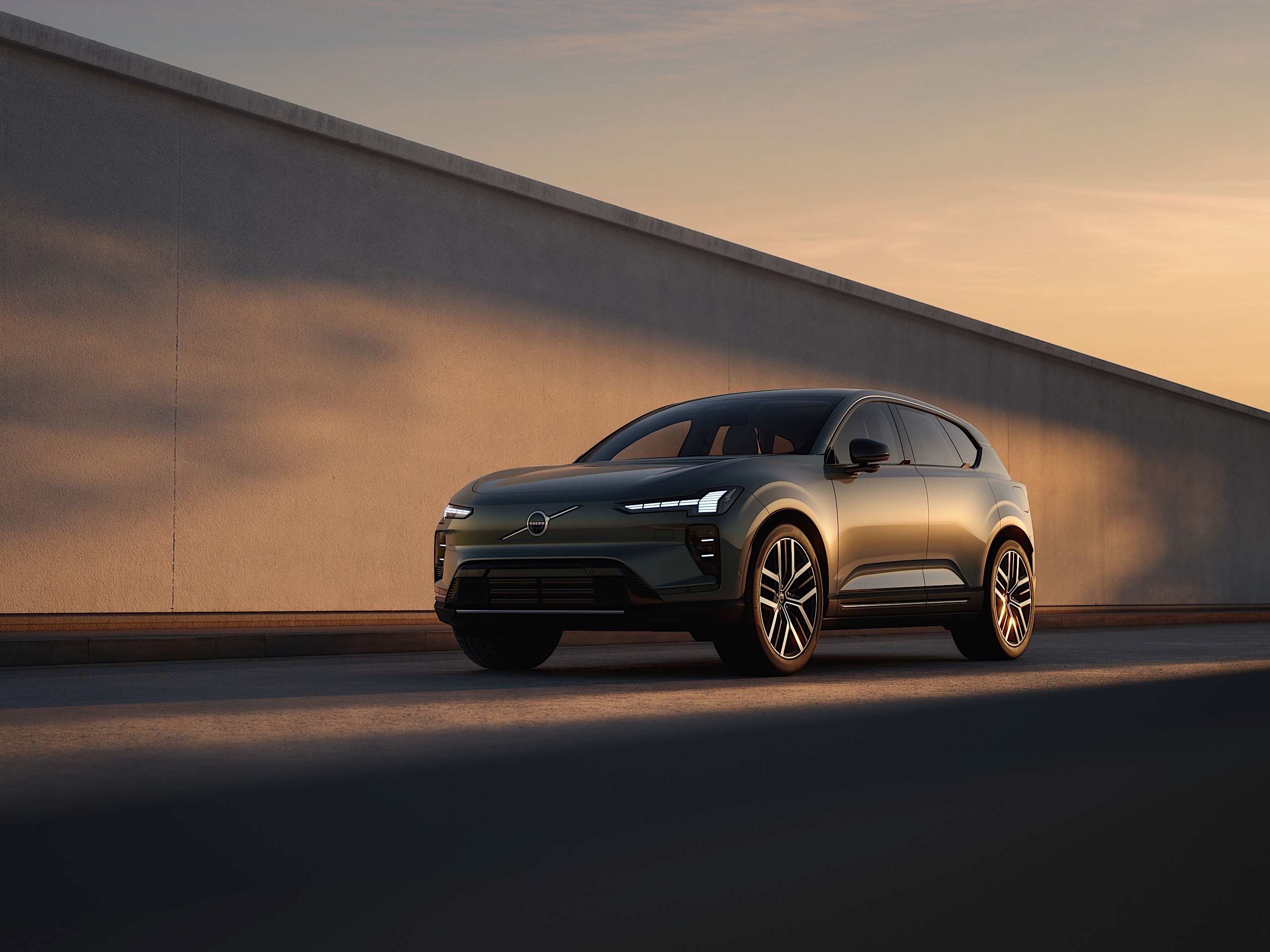
Let's start with the basics: The EX60 slots in the Volvo product lineup right alongside the existing XC60, Volvo's most popular model in the U.S. It's a two-row, mid-size SUV that seats five, the sort of thing perfect for those with small families or big dogs. It'll be available in three different basic configurations, starting with the single-motor, rear-drive, 369-horsepower, 310-mile EX60 P6. Next up is the AWD dual-motor, 503-hp, 320-mile P10, and finally the top-shelf, 670-hp, 400-mile P12.
670 horsepower in an SUV of this size seems frankly excessive to me, but then it does have a lot of weight to move around — 5,137 pounds to be exact. That’s thanks in large part to the P12's 112-kilowatt-hour net battery pack which is about 50 percent bigger than the one inside a Tesla Model Y. The P6 is a relatively svelte 4,663 pounds thanks to its smaller 80-kWh net battery pack, while the P10 has 91 kWh.
Volvo EX60
Volvo
Beyond the powertrain divisions, the Volvo EX60 will also be available in a variety of different trims with varying amounts of equipment, including the Volvo Cross Country edition with air suspension and a 20mm boost of ride height. Prices are said to start "around $60k" for an EX60 P10 Plus with a 21-speaker Bose system, but a 28-speaker Bowers & Wilkins system with Dolby Atmos will be available for those who really need all the channels.
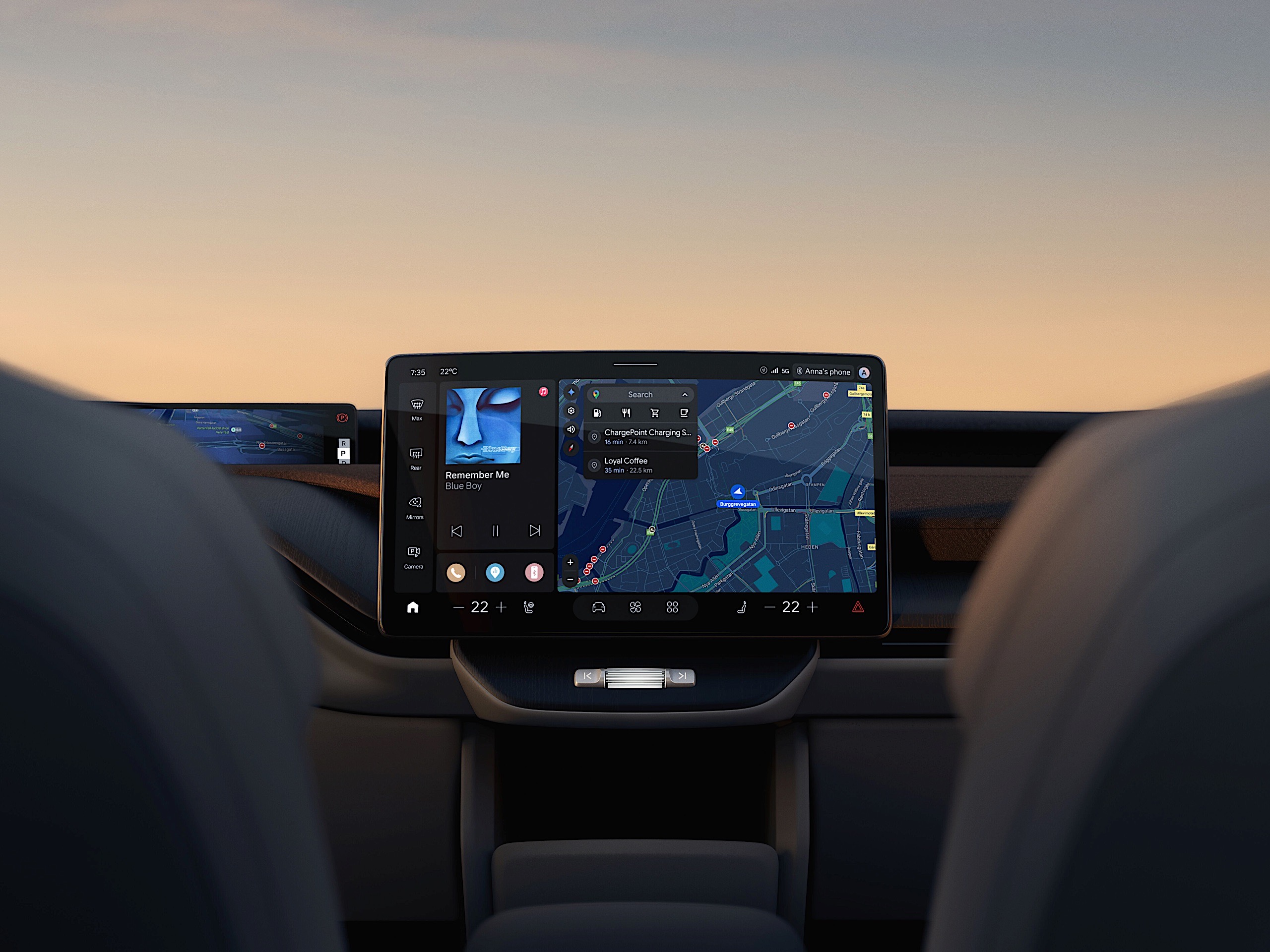
Of course, Atmos support is no good without a good source, and to that end, the EX60 will be the first Volvo with Apple Music built in. That'll be part of the company's Android Automotive-based infotainment system, running on a curved 15-inch OLED screen and powered by a Qualcomm 8255 chipset. It’s paired with a low, wide gauge cluster set far back on the dashboard behind the steering wheel.
This will also be Volvo's first car with integrated Gemini, and indeed one of the first cars on the road with Google's smart agent. You can, of course, do typical Gemini things like ask about the weather or the nuances of René Descartes's concepts on dualism. Beyond that, Volvo CTO Anders Bell said that it will eventually gain access to the car's outward-looking cameras, meaning you'll be able to ask for more details on whatever it is you can see looming on the horizon.
Volvo EX60
Volvo
Volvo calls the car's software-defined architecture and the hardware that powers it HuginCore, named for Huginn, the raven of Norse mythology and represents Odin's mind and senses. Qualcomm powers the infotainment side of the avian experience, but when it comes to active safety, the EX60 relies on an NVIDIA Drive AGX Orin chipset. Unlike the EX90, the EX60 will not use a LiDAR sensor.
Volvo CTO Bell downplayed the absence of the sensor. "We realized we can now achieve many more meaningful and safe automated functions without LiDAR than we could have years ago," he said. Per Bell, LiDAR was never really in the plan for the EX60 anyway, a decision looking all the brighter given the recent bankruptcy of Volvo's former LiDAR partner Luminar.
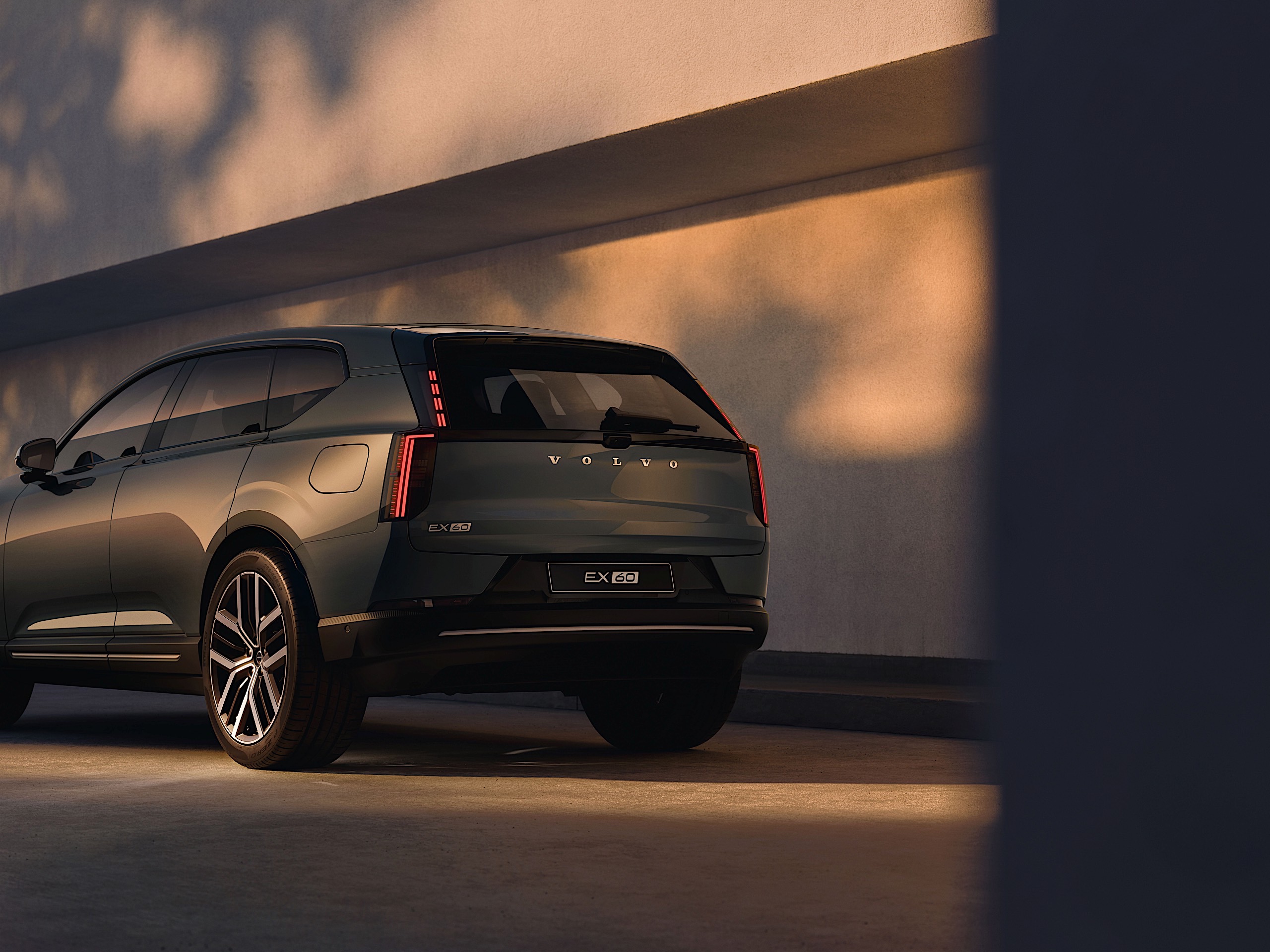
The car's cameras and radar sensors all tuck nicely into the new exterior of the EX60, which certainly doesn't look miles off from the EX90 or indeed the current, gas-powered XC60. But the pronounced flares on the front fenders are a nice touch of personality on an otherwise understated SUV.
At the core of the EX60 is a new platform Volvo calls SPA3, with a chassis made using gigacasting. This refers to the force required to inject molten aluminum into massive castings, allowing more of the car to be made from fewer components. Volvo says the carbon footprint of the EX60 is lower even than that of the much smaller EX30.
The battery packs use the on-trend cell-to-pack construction method, which means all the cells are lumped together into a single unit. Typically, this boosts density at the cost of repairability, a tradeoff most manufacturers seem willing to make in pursuit of higher range and lower costs. However, Bell said that the company has actually made pack maintenance easier by optimizing the layout of the ancillary equipment.
Volvo EX60
Volvo
"The absolute vast majority, 90 percent of anything that ever needs to be repaired on a battery pack is electronics," he said. In the EX60, Volvo positioned the battery electronics beneath the rear seat to make them even easier to access. "We save a lot of weight, save a lot of cost."
The EX60 will be Volvo's first car to use the Tesla-style NACS charging standard, and the largest two packs will support charging speeds up to 370 kW. That drops to 320 kW on the 80-kWh net P6.
In practical terms, though, they're all roughly the same. Each model charges from 10 to 80 percent in less than 20 minutes, adding between 160 and 173 miles of range in 10 minutes. That's not quite the 200 miles BMW's iX3 can manage in the same time, but it is close.
The iX3 will probably be the EX60's fiercest competition when Volvo opens up orders later this spring. The EX60's $60,000 price for a midrange P10 Plus puts it right in line with the $60,000 that BMW says to expect for its iX3. Mercedes hasn't set American pricing for its GLC yet, but that, too, will be on a lot of shoppers' lists to compare.
I've already been impressed by how both the iX3 and the GLC drive. Sadly, Volvo wouldn't let me behind the wheel of its EX60 just yet, but hopefully I can report back with impressions soon to start to see how all these stack up on the road.
This article originally appeared on Engadget at https://www.engadget.com/transportation/evs/volvo-ex60-suv-preview-400-mile-range-670-hp-and-google-gemini-onboard-173000033.html?src=rss
As an unabashed fan of electric vehicles, even I have to admit that most of them are pretty boring. Their smooth, quiet and calm demeanors don't offer much in the way of intrinsic personality, which has led to many brands slapping on outré designs and fake engine sounds to try and dial up the excitement.
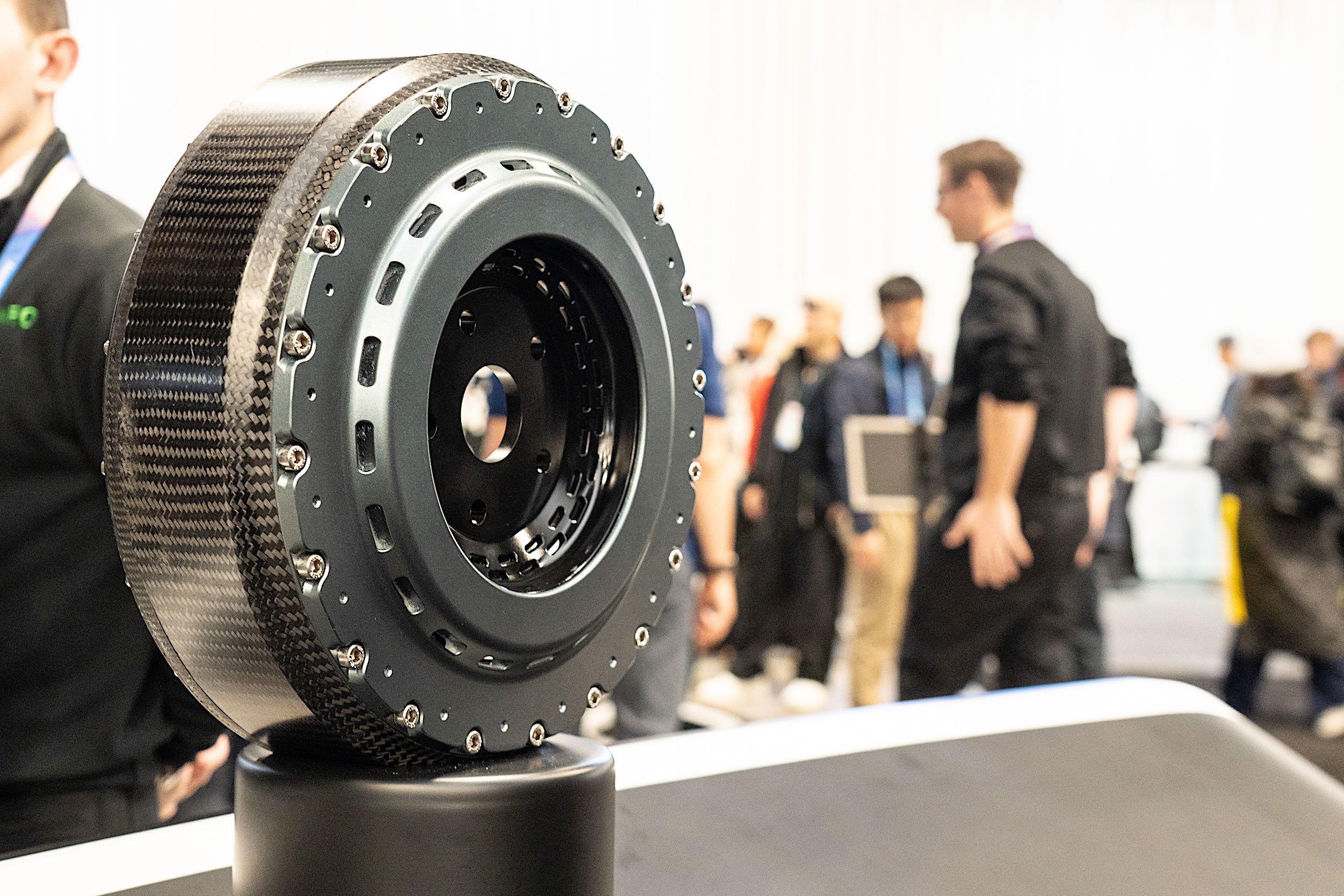
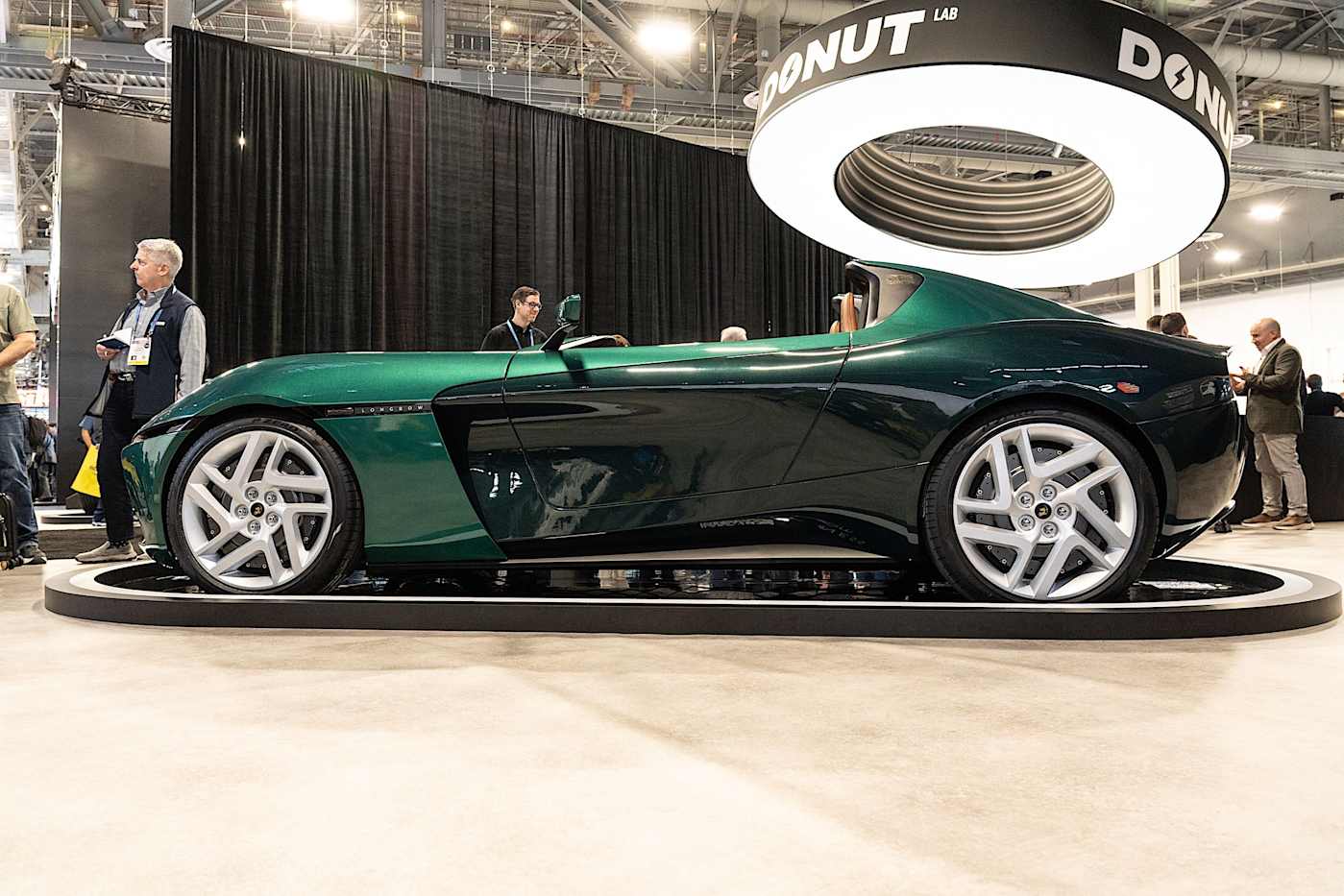
To that end, a pair of offerings coming soon from UK-based EV startup Longbow Motors looks to deliver exactly that. The Speedster and Roadster are high-performance electric machines built using advanced in-wheel motors from Donut Labs. Those motors and a bespoke design enable an astonishing curb weight of just 2,200 pounds.
For comparison's sake, that's over 100 pounds less than a Mazda Miata, the current king of lightweight roadsters. Longbow brought just the Speedster to CES 2026, displaying it on the show floor at the Donut Lab booth. Donut is a spinoff of Verge Motorcycles, which was the debut platform for the company's hub-less electric motor, creating a unique, Tron-style aesthetic.
But the technology is about a lot more than creating physics-defying motorcycles. Donut Lab is expanding its motors to all sorts of platforms, from scooters to heavy-duty trucks, creating a platform for easy adoption by electrified startups.
Donut Labs' motors in the Longbow Motors Speedster
Tim Stevens for Engadget
Of all those platforms, though, Longbow's implementation is the most compelling I've seen. The appeal starts with the style. Co-founders Daniel Davey and Mark Tapscott (who, with Jenny Keisu, founded Longbow after stints at Tesla and Lucid) told me they wanted to offer a classic but also modern and compelling look. The roofless Speedster has an edge over its glass-topped Roadster in terms of visual simplicity, but a complete lack of any protection from the elements — even a token windscreen — will make it viable only for the most committed of open-air enthusiasts.
Exposed or protected, you'll find yourself situated in an extremely spartan interior. Things like the gauge cluster and primary controls were covered, set to be revealed later, so I can't say for sure exactly what the Longbow looks like on the inside. But it was designed to be basic and minimal to an extreme, an abject rejection of the rest of the touchscreen-laden machines on the road today.
There is one seemingly unnecessary piece of equipment in the interior, though, and that's a shift knob. EVs, of course, rarely have transmissions, so there's no outright need to shift. The purpose of that lever is also a mystery for now, as neither Davey nor Tapscott would confirm its function, but it seems safe to expect some sort of simulated gearshift action, a la the Hyundai Ioniq 5 N.
The Longbow machines don't just lack a transmission, they lack a traditional drivetrain layout at all. The direct-drive Donut Lab motors are situated right inside the wheel, freeing up space inside the vehicle's chassis and helping it to maintain its pert dimensions.
Longbow Motors Speedster
Billy Steele for Engadget
They also provide a distinctive look, filling up the wheels as they do. There is a downside to this arrangement, that being the heft of these motors hanging on the outer edges of the vehicle. The suspension, then, has to work a bit harder. But co-founder Mark Tapscott told me that the positives outweigh the negatives, and that the handling benefits of having multiple motors alone are worth it.
To keep the rest of the Longbow's weight centralized, the car uses a battery pack that runs largely along the center of the machine, stacked vertically rather than spread throughout the floor. This keeps the mass centralized in the vehicle while also enabling the kind of ultra-low seating you want in a machine like this.
It looks like it'll be quite a fun package to drive, and while exact power output from those Donut Lab motors hasn't been confirmed yet, the Speedster is said to sprint to 60 mph in just 3.5 seconds. That's supercar-like performance, but unfortunately, that performance won't come cheap.
The Speedster starts at ₤84,995, or just under $100,000 by current conversion rates. The Roadster is a fair bit more attainable at ₤64,995, or about $75,000. However, given the wonderfully chaotic state of international tariffs right now, expect the actual pricing here to be somewhat higher when they go into production later this year. Reservations are open now on the company's site.
That's a little too rich for my blood, sadly, but if you've got the budget, a left-hand drive version will be available. And yes, it'll be fully road-legal in the U.S.
This article originally appeared on Engadget at https://www.engadget.com/transportation/evs/ces-2026-longbow-motors-shows-off-its-speedster-ev-with-donut-labs-in-wheel-motors-192329111.html?src=rss
If you've never docked a boat before, consider yourself lucky. There are plenty of popular TikTok channels devoted to shaming those who bring their craft back home clumsily or berth them with something less than finesse. Tricky crosswinds, unpredictable surf and even the jeers of passersby can make it a stressful experience at the best of times.
Brunswick, which owns more than 50 water-borne brands like Sea Ray, Bayliner and Mercury Marine, has a solution. It's demonstrating some self-docking tech called AutoCaptain at CES 2026 that makes this process a cinch, plus a fleet of other innovations that, in some cases, leave some of the smart cars on the show floor looking a bit remedial.
One of those technologies is edge AI. While in-car AI is an increasingly common feature, those agents are exclusively running remotely, relying on cellular connections to offload all the processing power required to drive a large language model.
Sadly, that won't always work on a boat.
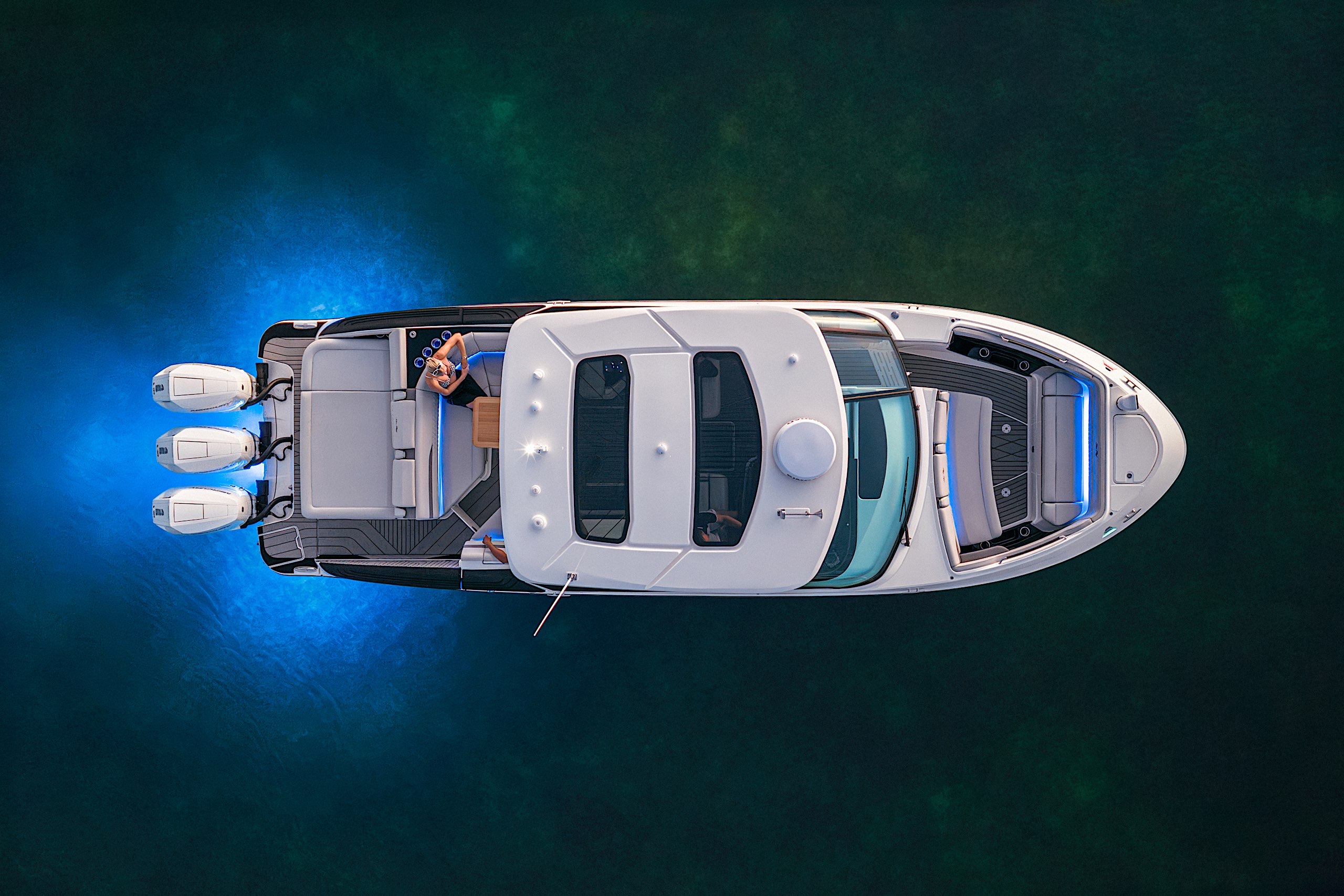
One of Brunswick's tech-equipped boats
Brunswick
"One of the things about AI for boats is you don't have connectivity, so there is some edge compute required," David M. Foulkes told me. He's chairman and CEO of Brunswick.
Many of the company's boats do have active cellular connectivity, but head far enough offshore, and you're on your own unless you're packing Starlink or the like.
To solve that, Brunswick is running advanced SoCs from NVIDIA and other providers that enable running a limited agent offline — on the edge, as it were. When offline, Misty, as the on-boat AI assistant is called, won't be able to make dinner reservations or craft a 3,000-word treatise on the history of America's relationship with Greenland. It can, however, help with navigation or boat settings.
"It'll help answer the kind of questions that you might need to take out a manual to understand and maybe act as an assistant to make your boating a bit smoother," Foulkes said.
When the company's smart boats are connected, they offer some degree of remote control. No, you can't drive it around the docks and freak out your pier-mates, but you can check on the boat remotely to make sure nobody's trying to stow away. You can even precondition it to get the cuddy cabin nice and cool before you come aboard.
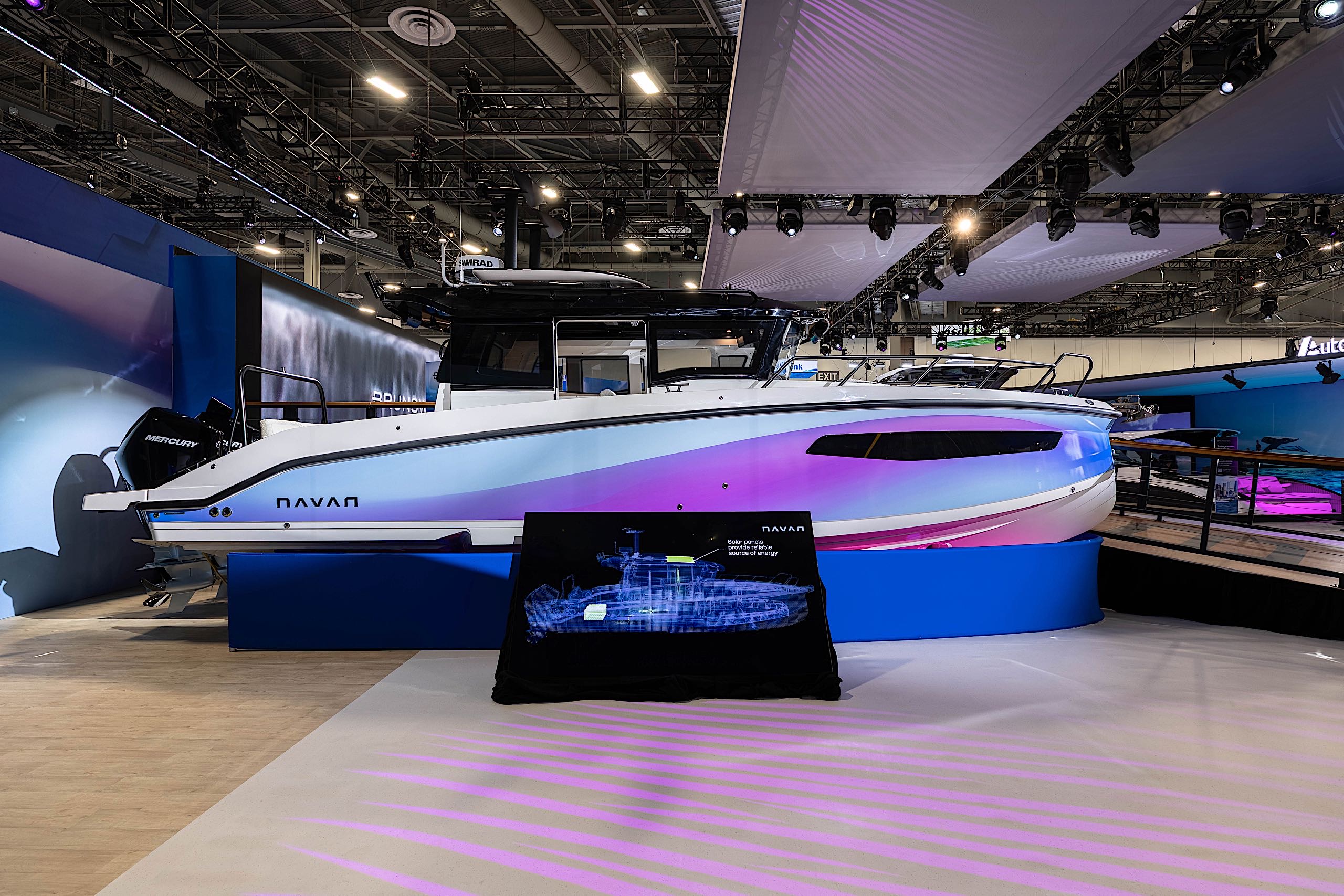
Navan C30
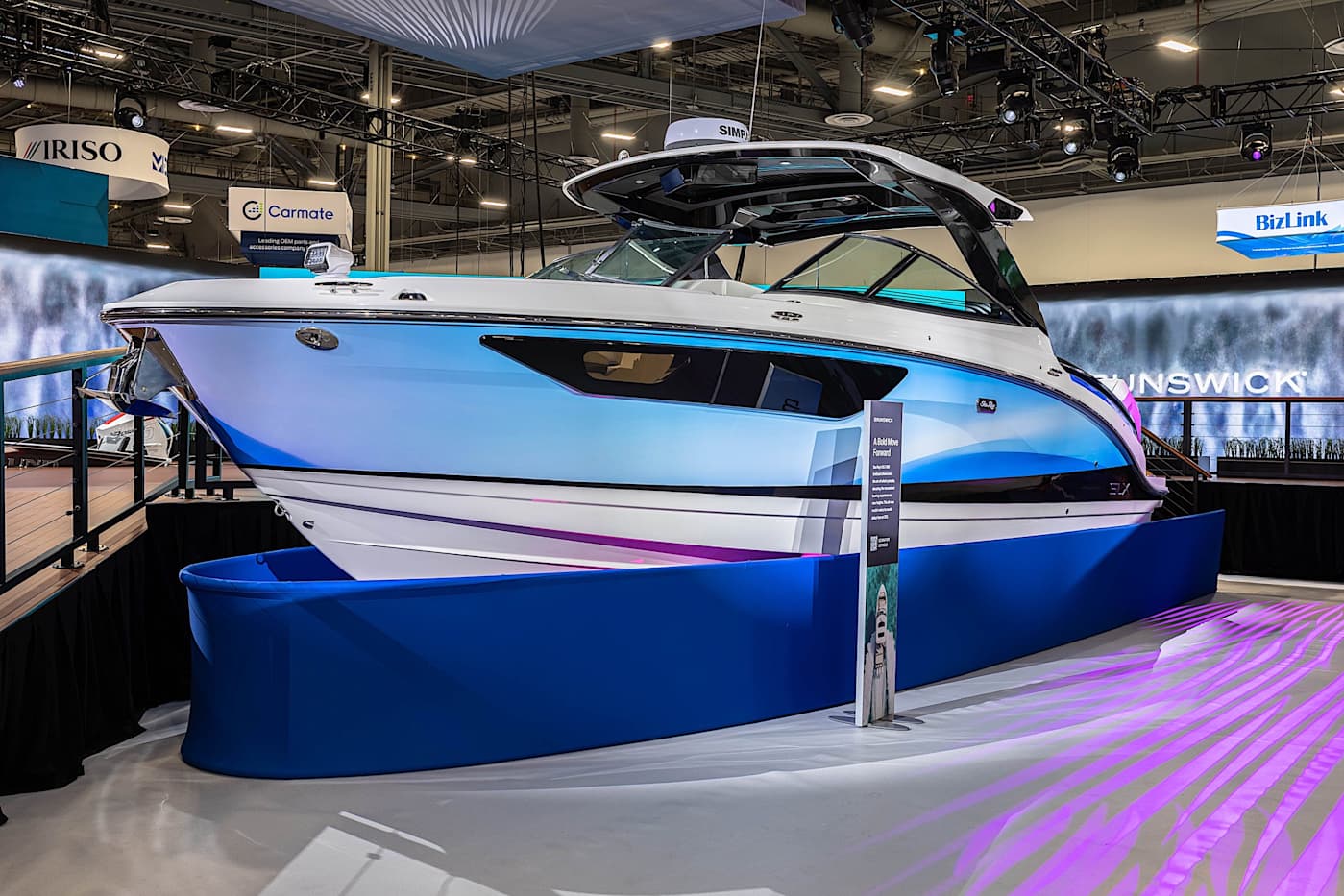
Power for that, and a variety of other onboard systems, can come from an integrated power system called Fathom, which has a lot in common with modern smart home tech. Solar panels on the roof (nicely disguised beneath a black mesh) collect power to recharge an onboard battery, with various sizes upwards of 30 kWh depending on the boat's size. That battery can also be recharged by the onboard motors, like the three 425-horsepower V10s the Sea Ray SLX 360 drydocked at the Brunswick booth at CES 2026.
The juice in that battery can then be used to power a variety of onboard systems, even charging a pair of electric hydrofoils, which another of the company's boats, called the Navan C30, had strapped on the roof.
You'll also find cameras on the roof of these boats. That's how the AutoCaptain feature works, numerous fisheye lenses scanning the water in every direction. Approach a pier and the AI assistant asks if you'd like some help docking. Just tap the button on the touchscreen, then kick back and let Misty do the driving.
Between automated docking, the in-cabin AI assistant and the smart power distribution system, Brunswick's boats offered some impressive tech. But then they'd have to, given the cost. The Sea Ray SLX 360 Outboard has a starting price of $586,000. The smaller Navan C30 is a rather more attainable, but still extreme, at $227,500. That’s still probably cheaper than hiring a real captain, though.
This article originally appeared on Engadget at https://www.engadget.com/transportation/brunswicks-latest-boats-at-ces-2026-feature-edge-ai-self-docking-capabilities-and-solar-power-185500213.html?src=rss
 Anmelden