
❌

Normale Ansicht

„A blast from the past“ – BitCam

24. August 2026 um 22:49

Einige der interessantesten Kamera-Apps entstehen in den Héliographe Studios. BitCam stieß erst vor 10 Monaten zu ihrem Portfolio und geht ursprünglich auf die Iconfactory zurück, die sich zu ihrem 20-jährigen Bestehen damit selbst beschenkte.
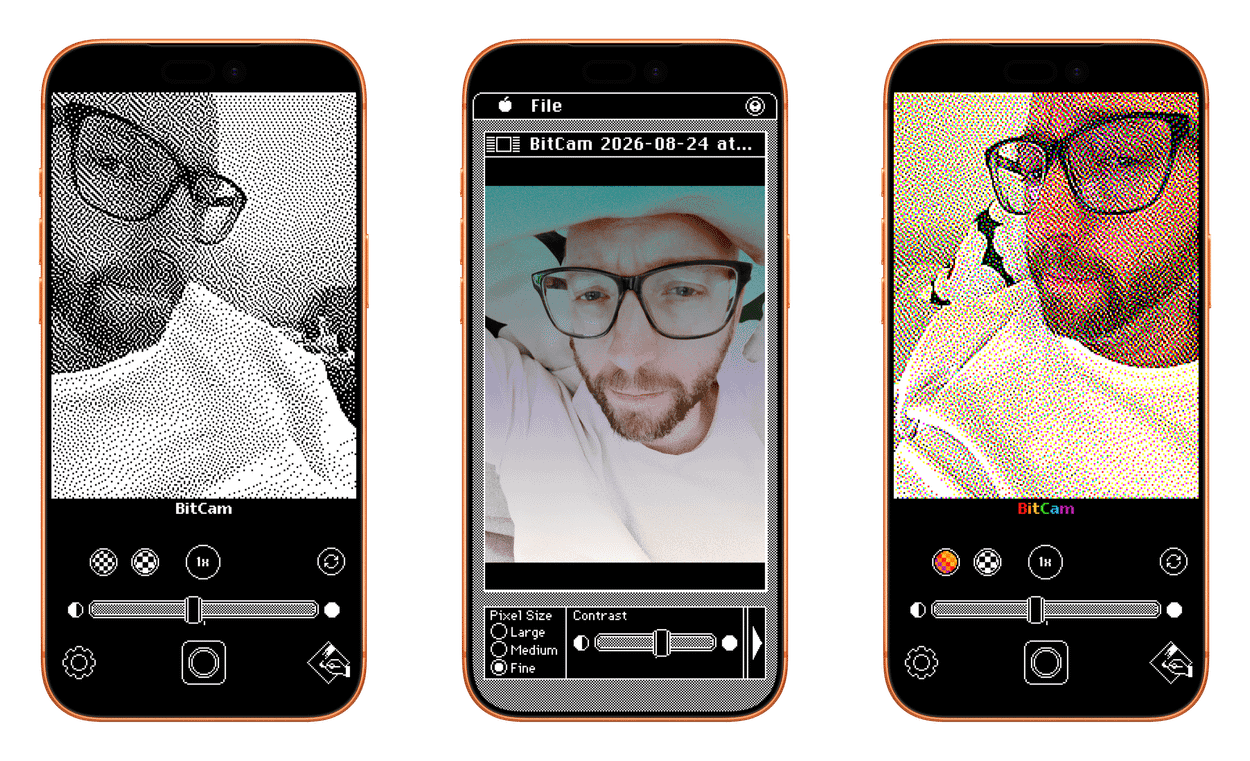
Drei Smartphones nebeneinander, die jeweils die Kamera-App BitCam zeigen. Jeder Bildschirm präsentiert einen anderen Retro-Filter mit Pixel- oder Raster-Effekten auf einem Selfie einer Person mit Brille, ergänzt durch Bedienelemente wie Regler für Pixelgröße und Kontrast.

I see many fewer artificially aged or worn pictures these days, and the range of filters has expanded into a greater array of interesting photographic effects. The Iconfactory’s new BitCam, a nostalgic dithered camera app, would at first seem to be another filter and just a gimmick. It accurately reproduces the look and feel of a 1984-style Macintosh app down to using a similar dithering algorithm to what Bill Atkinson baked into the graphics-primitive QuickDraw system that drove the graphical user interface and drawing programs—and that’s now also baked into iOS.

Macworld | Glenn Fleishman (2016)

Zugegeben: Nach dem initialen Start tat sich bei BitCam wenig. Ich hege nun die Hoffnung, dass unter neuer Schirmherrschaft künftig nur noch der Look von gestern bleibt.
  •  

„Analogue 1.5: Pro Capture Mode“

22. August 2026 um 18:01

Ausnahmen bestätigen sicherlich die Regel, aber dem Google Play Store fehlt gegenüber iOS die große Auswahl an Drittkamera-Apps.

Eine dieser Apps ist etwa Analogue.

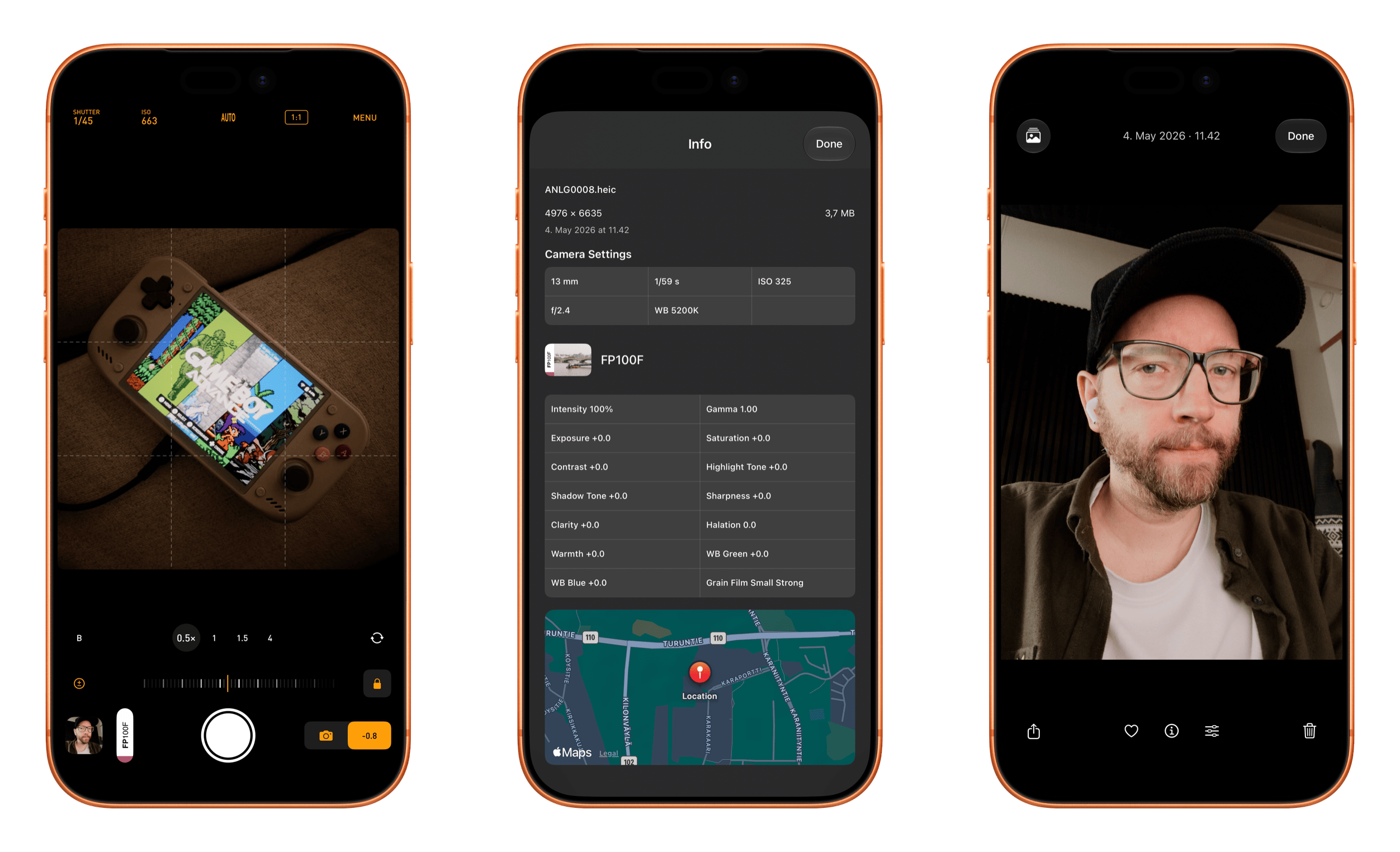
Drei Smartphone-Bildschirme zeigen eine Kamera-App, Metadaten zu einem Foto und ein Porträtfoto. Der linke Bildschirm zeigt eine Kamera-App, die ein tragbares Retro-Spielgerät aufnimmt. Der mittlere Bildschirm zeigt technische Kameraeinstellungen, Informationen zum Filmprofil und einen Kartenausschnitt. Der rechte Bildschirm zeigt ein Porträt einer Person mit Brille und Kappe innerhalb einer Galerie-App.

That made me ask a different question: could Apple Log continue to drive the preview while the photo itself was captured another way?

The combination of Apple Log and RAW felt like the dream. Apple Log could preserve the accurate, finished preview that makes Analogue enjoyable to shoot with, while RAW could provide the full frame, detail and flexibility that the final photo deserves.

analoguecapture.com/blog/

Ich erwähne es, weil im aktuellen Vergecast diese beiden Feststellungen über die Aufgabe einer Smartphone-Kamera gefallen sind.

Smartphone cameras are not, they’re not artistic cameras. They’re information transfer cameras. […]

Yeah. I mean, I would slightly disagree with the information transfer aspect of the camera. I think it’s a huge component of what a smartphone camera needs to do. I think the bigger thing is they can never fail to take a photo, right?

„Pixel 11 gets in on the digicam trend“

Und genau deshalb ist ein Ökosystem mit einer breiten Auswahl an Software so wichtig. Erst damit wird aus einer Kamera, die Informationen übermittelt und immer ein erkennbares Bild produzieren muss, ein kreatives Medium.

  •  

RAW 9 ist Apples erster großer Sprung seit Jahren

29. Juni 2026 um 14:04

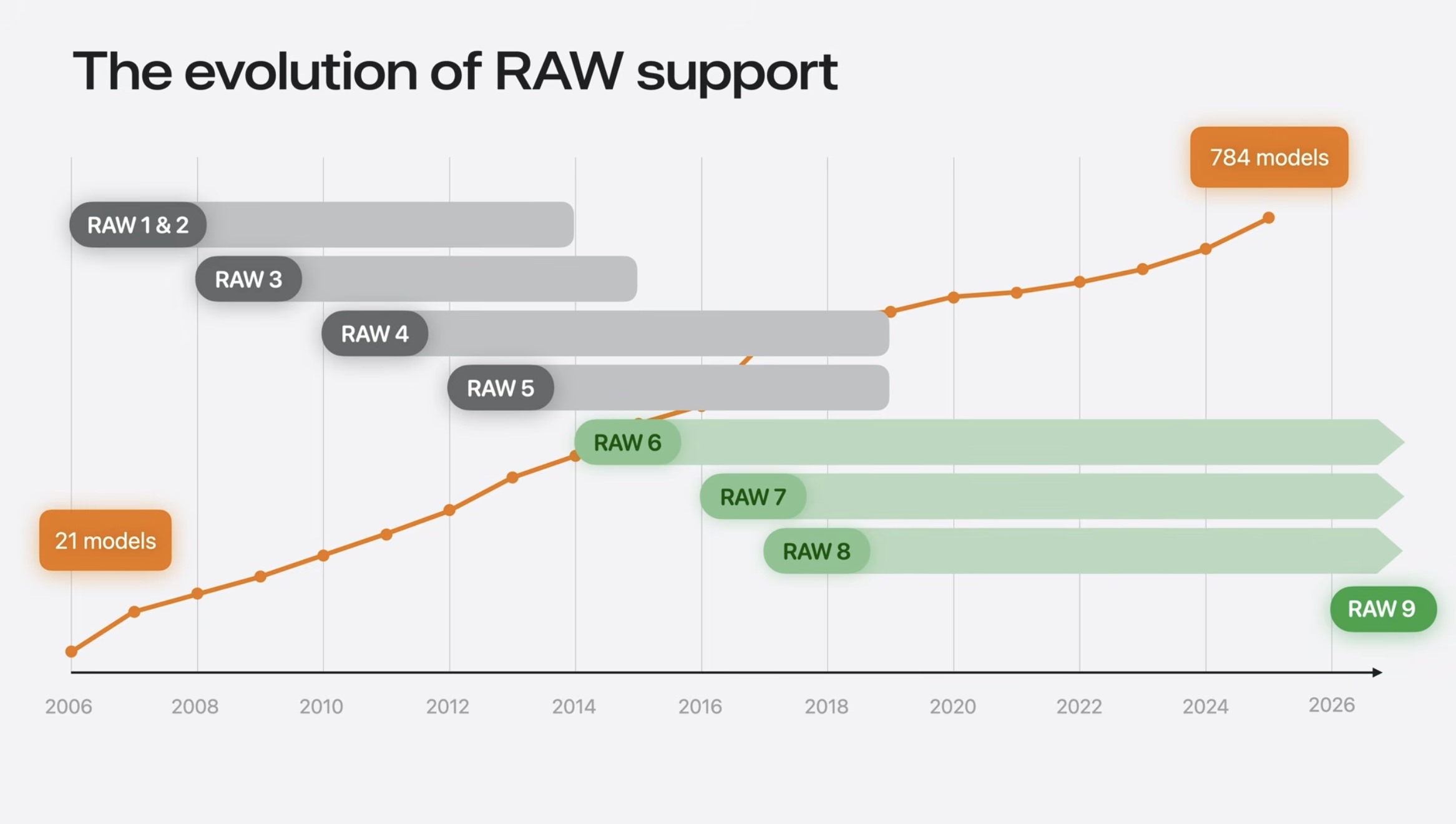
Apples RAW-Unterstützung wurde über die Jahre zwar kontinuierlich um neue Kameramodelle erweitert; die Engine verharrte dagegen auf RAW 8. Version 9 ist der erste große RAW-Qualitätssprung seit fast einem Jahrzehnt.

Ein Liniendiagramm mit dem Titel „Die Entwicklung der RAW-Unterstützung“ zeigt den Anstieg der Kameramodelle mit RAW-Unterstützung von 2006 bis 2026. Die Anzahl der unterstützten Modelle steigt von 21 im Jahr 2006 auf 784 im Jahr 2025. Überlagerte horizontale Balken zeigen die aktiven Zeiträume für die verschiedenen RAW-Versionen 1 bis 9 an.

A typical RAW pipeline involves demosaicing (reconstructing full-colour pixels from the captured RGB mosaic), noise reduction and other adjustments. But with RAW 9, demosaicing and AI-powered denoising processes happen simultaneously rather than as separate steps. According to Apple, this produces cleaner, sharper, more detailed results.

Apple showed off some ‘before and after’ examples – see below. The improvements were stark, with eye-popping reductions in noise and meaningful gains in detail. Apple also claimed the new processing is fast and responsive – if more resource-intensive. It’s also easy for app developers to integrate, due to requiring only a few lines of code.

Craig Grannell | Enhance RAW image processing with Core Image

Ich belaste mich nicht mit digitalen Umzugskisten, in denen ein Altbestand an RAWs verstaubt, freue mich jedoch sehr auf künftige Bearbeitungen. Das „eingebaute RAW-Prozessing auf OS-Ebene“ dürften alle Apps, die ich benutze, direkt einbauen.

  •  
❌