Two months following the deadly shooting in Tumbler Ridge, British Columbia, OpenAI's Sam Altman has formally apologized for not informing police of the alarming ChatGPT conversations seen with the suspect's account. Before the incident, OpenAI banned the account belonging to the alleged shooter, Jesse Van Rootselaar, for violating its usage policy due to potential for real-world violence.
"I am deeply sorry that we did not alert law enforcement to the account that was banned in June," Altman wrote in the letter. "While I know words can never be enough, I believe an apology is necessary to recognize the harm and irreversible loss your community has suffered."
Altman noted in the letter, which was published in full by Tumbler RidgeLines, that he spoke with both Darryl Krakowa, Tumbler Ridge's mayor, and David Eby, the British Columbia premier, and agreed that a "public apology was necessary, but that time was also needed to respect the community as you grieved."
Eby, who also highlighted Altman's letter in his post on X, agreed that the "apology is necessary," but added that it was "grossly insufficient for the devastation done to the families of Tumbler Ridge." Moving ahead, Altman reaffirmed in the letter that OpenAI would "find ways to prevent tragedies like this in the future" and work with all levels of government to prevent something like this from happening again. Altman's latest commitment builds on the previous letter from OpenAI's vice president of global policy Ann O’Leary, who said the company would notify authorities if it finds "imminent and credible" threats in ChatGPT conversations.
This article originally appeared on Engadget at https://www.engadget.com/ai/openais-sam-altman-apologizes-for-not-reporting-chatgpt-account-of-tumbler-ridge-suspect-to-police-221400813.html?src=rss
CEO of OpenAI Sam Altman speaks during the 2026 Infrastructure Summit of government officials, corporate executives, and labor leaders, in Washington, D.C., U.S., March 11, 2026. REUTERS/Kylie Cooper
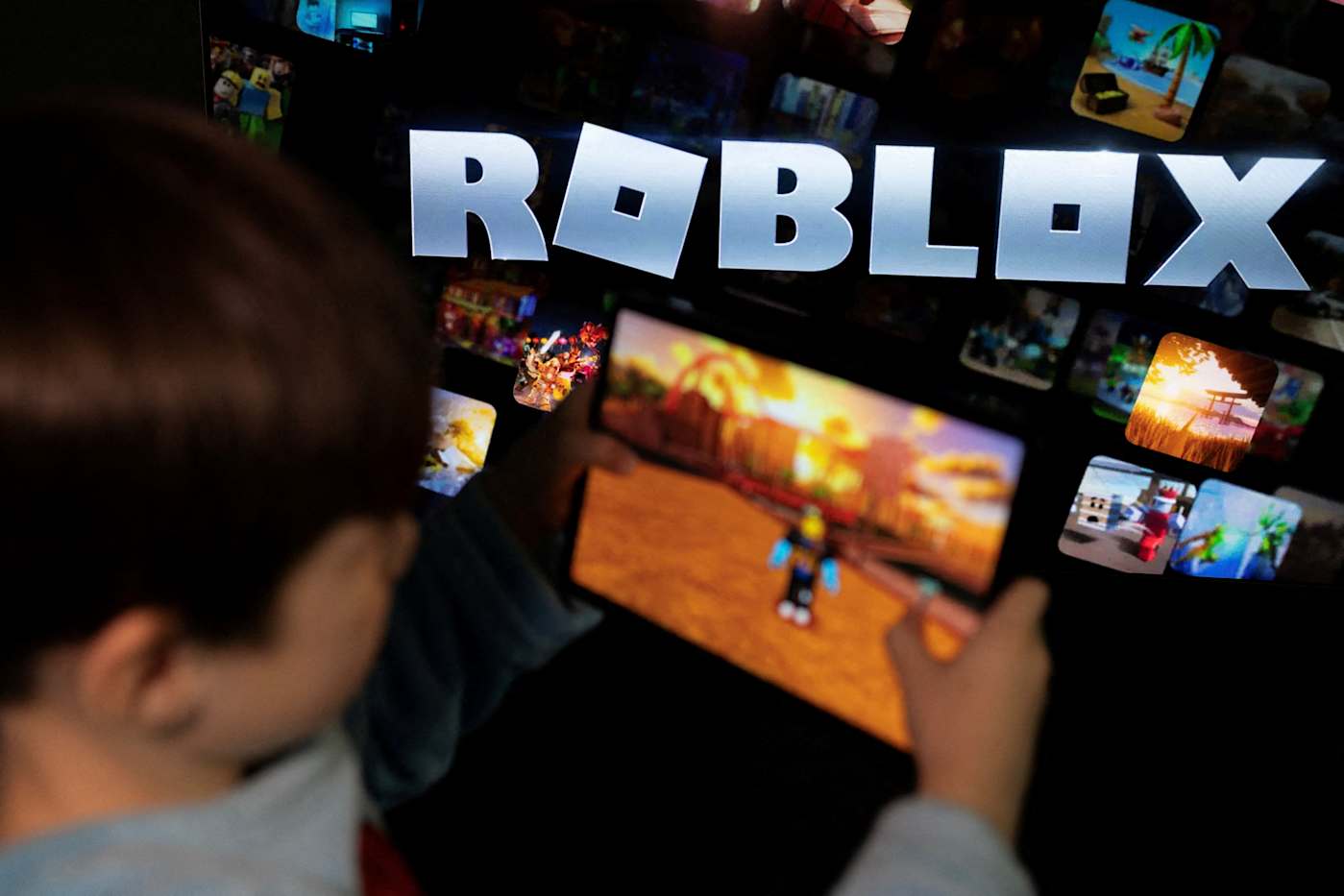
Following the agreement, Nevada Attorney General Aaron Ford said "this settlement will create a safer environment for our children online, and I hope that it will serve as a bellwether for how online interactive platforms allow our state's youth to use their products." As part of the deal, Roblox has agreed to give $10 million over three years to local children's support programs like the Boys and Girls Club and other nondigital groups while spending another $2.5 million to fund a law enforcement liaison position and awareness campaigns regarding online safety.
Additionally, Roblox will also implement more rigorous safety protocols including an age verification system that combines a facial age estimation system with government-issued IDs that will only allow children to talk with other players of a similar age. Furthermore, users under 16 will not be allowed to message adults unless they have been designated as a "trusted friend," which can be assigned via QR code. This is intended to ensure that any adults who talk to minors on the platform have an existing relationship with the child.
Parental controls will be available for accounts of users up to 16 years old (previously the limit was 13). The company says it will also create children's accounts for anyone under 16 that will restrict access to adult content and provide a list of games that have been vetted to be appropriate for younger players. These changes come after a recent update that established new guidelines for Roblox Kids accounts (for children between five and eight years old) and Roblox Select accounts (for children between nine and 15), which come with varying content and chat restrictions.
However, while Roblox has settled with Nevada, the company is still facing a number of lawsuits from other parties and states including Kentucky, Iowa, Louisiana, Texas and more, regarding claims that the platform has knowingly facilitated child sexual exploitation.
This article originally appeared on Engadget at https://www.engadget.com/gaming/roblox-agrees-to-a-12-million-settlement-with-nevada-142842421.html?src=rss
Pioneering mathematician Dr. Gladys West has passed away at the age of 95. Her name may not be familiar to you, but her contributions certainly are; West's work laid the foundation for the global positioning system. As you likely know from experience, GPS is now an essential component of industries ranging from aviation and emergency response, as well as ensuring that you get to that dinner date or job interview on time.
This morning the world lost a pioneer in Dr Gladys West, she passed peacefully alongside her family and friends and is now in heaven with her loved ones. We thank you in advance for all of the love and prayers you have and will continue to provide pic.twitter.com/FJ3aGfEiHP
West was born in 1930 in Virginia. Despite the oppression of Jim Crow laws in the south, she was able to pursue higher education at Virginia State College (now named Virginia State University), obtaining bachelor's and master's degrees in mathematics. In 1956, West was hired at what is now called the Naval Surface Warfare Center in Dahlgren, VA. Her focus during the 1970s and 1980s was creating accurate models of the Earth's shape based on satellite data, a complex task requiring the type of mathematical gymnastics that would make the average person dizzy. Those models later became the backbone for GPS. West worked at the Dahlgren center for 42 years, retiring in 1998.
As has been the case with so many of the women, particularly those of color, behind tech and science breakthroughs in the US, West's work went largely uncelebrated for decades. After submitting a short biography of her accomplishments to a sorority function in 2018, members of Alpha Kappa Alpha helped West to receive belated recognition for her contributions. She was inducted into the US Air Force Space and Missiles Pioneers Hall of Fame and honored as Female Alumna of the Year by the Historically Black Colleges and Universities Awards in that same year. The Guardian published an interview with West in 2020 that shared some insights on her journey, including a note that when West was out and about, she favored paper maps over the technology she indirectly helped create.
This article originally appeared on Engadget at https://www.engadget.com/science/dr-gladys-west-whose-mathematical-models-inspired-gps-dies-at-95-234605023.html?src=rss
Last week at CES, Lego introduced its new Smart Play system, with a tech-packed Smart Brick that can recognize and interact with sets and minifigures. It was unexpected and delightful to see Lego come up with a way to modernize its bricks without the need for apps, screens or AI.
So I was a little surprised this week when the Lego Education group announced its latest initiative is the Computer Science and AI Learning Solution. After all, generative AI feels like the antithesis of Lego’s creative values. But Andrew Silwinski, Lego Education’s head of product experience, was quick to defend Lego’s approach, noting that being fluent in the tools behind AI is not about generating sloppy images or music and more about expanding what it means by teaching computer science.
“I think most people should probably know that we started working on this before ChatGPT [got big],” Silwinski told Engadget earlier this week. “Some of the ideas that underline AI are really powerful foundational ideas, regardless of the current frontier model that's out this week. Helping children understand probability and statistics, data quality, algorithmic bias, sensors, machine perception. These are really foundational core ideas that go back to the 1970s.”
To that end, Lego Education designed courses for grades K-2, 3-5 and 6-8 that incorporate Lego bricks, additional hardware and lessons tailored to introducing the fundamentals of AI as an extension of existing computer science education. The kits are designed for four students to work together, with teacher oversight. Much of this all comes from learnings Lego found in a study it commissioned showing that teachers often find they don’t have the right resources to teach these subjects. The study showed that half of teachers globally say “current resources leave students bored” while nearly half say “computer science isn’t relatable and doesn’t connect to students’ interests or day to day.” Given kids’ familiarity with Lego and the multiple decades of experience Lego Education has in putting courses like this together, it seems like a logical step to push in this direction.
In Lego’s materials about the new courses, AI is far from the only subject covered. Coding, looping code, triggering events and sequences, if/then conditionals and more are all on display through the combination of Lego-built models and other hardware to motorize it. It feels more like a computer science course that also introduces concepts of AI rather than something with an end goal of having kids build a chatbot.
In fact, Lego set up a number of “red lines” in terms of how it would introduce AI. “No data can ever go across the internet to us or any other third party,” Silwinski said. “And that's a really hard bar if you know anything about AI.” So instead of going to the cloud, everything had to be able to do local inference on, as Silwinski said, “the 10-year-old Chromebooks you’ll see in classrooms.” He added that “kids can train their own machine learning models, and all of that is happening locally in the classroom, and none of that data ever leaves the student's device.”
Lego also says that its lessons never anthropomorphize AI, one of the things that is so common in consumer-facing AI tools like ChatGPT, Gemini and many more. “One of the things we're seeing a lot of with generative AI tools is children have a tendency to see them as somehow human or almost magical. A lot of it's because of the conversational interface, it abstracts all the mechanics away from the child.”
Lego also recognized that it had to build a course that’ll work regardless of a teacher’s fluency in such subjects. So a big part of developing the course was making sure that teachers had the tools they needed to be on top of whatever lessons they’re working on. “When we design and we test the products, we're not the ones testing in the classroom,” Silwinski said. “We give it to a teacher and we provide all of the lesson materials, all of the training, all of the notes, all the presentation materials, everything that they need to be able to teach the lesson.” Lego also took into account the fact that some schools might introduce its students to these things starting in Kindergarten, whereas others might skip to the grade 3-5 or 6-8 sets. To alleviate any bumps in the courses for students or teachers, Lego Education works with school districts and individual schools to make sure there’s an on-ramp for those starting from different places in their fluency.
While the idea of “teaching AI” seemed out of character for Lego initially, the approach it’s taking here actually reminds me a bit of Smart Play. With Smart Play, the technology is essentially invisible — kids can just open up a set, start building, and get all the benefits of the new system without having to hook up to an app or a screen. In the same vein, Silwinski said that a lot of the work you can do with the Computer Science and AI kit doesn’t need a screen, particularly the lessons designed for younger kids. And the sets themselves have a mode that acts similar to a mesh, where you connect numerous motors and sensors together to build “incredibly complex interactions and behaviors” without even needing a computer.
For educators interested in checking out this latest course, Lego has single kits up for pre-order starting at $339.95; they’ll start shipping in April. That’s the pricing for the K-2 sets, the 3-5 and 6-8 sets are $429.95 and $529.95, respectively. A single kit covers four students. Lego is also selling bundles with six kits, and school districts can also request a quote for bigger orders.
This article originally appeared on Engadget at https://www.engadget.com/ai/legos-latest-educational-kit-seeks-to-teach-ai-as-part-of-computer-science-not-to-build-a-chatbot-184636741.html?src=rss

 Anmelden